5 Ways to Use Back Office Automation to Scale in 2026

August 7, 2026

Share this article

Back office automation is the use of cloud software and AI to digitize administrative tasks like payroll, bookkeeping, and data entry. By integrating tools like NetSuite or Sage Intacct, businesses eliminate manual errors, reduce operational costs, and allow finance teams to focus on high-level strategic advisory rather than repetitive processing.

In the fast-paced business landscape of the San Francisco Bay Area and Sacramento, efficiency isn’t just a luxury—it’s a survival mechanism. If your finance team is still drowning in spreadsheets or manually chasing down receipts, you’re losing more than just time; you’re losing the ability to scale. Back office automation represents the bridge between being a reactive business and a proactive leader in your industry. Whether you are managing a mid-sized firm in San Jose or a large enterprise in New York, the shift toward automated systems is the most significant competitive advantage available today.

What is back office automation for growing companies?

At its core, back office automation involves replacing manual, human-led processes with software-driven workflows. For a mid-to-large sized company, this usually means connecting your disparate systems—like your CRM, your payroll provider, and your bank—into a single source of truth. This isn't just about "saving time." It is about creating a data environment where financial reporting is instantaneous and accurate.

Key components of back office automation include:

  • Automated Data Entry: Using OCR technology to read invoices and sync them to your ledger.
  • Workflow Orchestration: Automatically routing approvals for expenses or purchase orders.
  • System Integration: Ensuring Salesforce, NetSuite, and Expensify talk to each other without human intervention.
  • Real-time Reconciliation: Bank feeds that categorize transactions as they happen.
  • Digital Compliance: Systems that automatically apply tax laws and regional regulations.

For companies operating across various jurisdictions like San Juan or Los Angeles, these systems ensure that local compliance is baked into the process, rather than being an afterthought that requires manual auditing.

Why San Francisco firms are automating now

The Bay Area has always been a hub for innovation, but the current economic climate has accelerated the need for Services that prioritize lean operations. High labor costs in cities like San Francisco and Burbank mean that every hour a controller spends on manual data entry is an hour of wasted high-value talent. Firms are now looking toward AI automation consulting to bridge the gap between their existing headcount and their growth targets.

Automating the back office allows these companies to maintain a lean administrative team even as their revenue grows. This is particularly vital for companies undergoing ERP project management , where the goal is to centralize operations. By offloading the "grunt work" to AI-driven modules, businesses in our region are finding they can pivot faster, respond to market changes with better data, and provide a better experience for their employees who no longer have to deal with clunky, outdated software.

Modern San Francisco Office

How can automating payroll reduce compliance risks?

Payroll is one of the most high-stakes functions in any back office. A single mistake in tax withholding or a missed deadline can lead to massive penalties. When you automate payroll, you aren't just making it faster; you are making it safer. Automated systems like those integrated with Sage Intacct or NetSuite automatically update to reflect the latest state and federal tax codes, which is essential for companies with employees spread across Sacramento, San Jose, and New York.

Benefits of an automated payroll system include:

  • Elimination of Calculation Errors: Software doesn't make typos or forget to calculate overtime rates.
  • Automated Tax Filings: The system calculates, withholds, and pays taxes to the appropriate agencies.
  • Employee Self-Service: Staff can access their own pay stubs and tax forms, reducing HR inquiries.
  • Direct Integration: Payroll data flows directly into your financial reporting software for a clear view of labor costs.
  • Audit Trails: Every change and every payment is logged, making year-end audits a breeze.

By moving away from manual entry, your payroll department shifts from being a data-entry center to a strategic wing of the business. You can learn more about how we support these transitions on our About page, where we detail our experience with complex payroll integrations.

The shift from manual bookkeeping to AI-driven insights

Traditional bookkeeping is a backward-looking function. You look at what happened last month and try to make sense of it. AI-driven bookkeeping changes the narrative by providing real-time insights. Instead of waiting for a month-end close that takes two weeks, automation allows for a "continuous close." This means your financial reporting is always up to date, giving you the power to make decisions based on what is happening today .

With tools like Method and QuickBooks integrated via smart automation, transactions are categorized the moment they occur. AI learns from your historical data, identifying patterns and flagging anomalies that might indicate fraud or simple errors. For a mid-sized company in the San Francisco Bay Area, this level of oversight is invaluable. It transforms the bookkeeper role into a fractional controllership function, focusing on analyzing the data rather than just recording it. This shift is a cornerstone of modern accounting advisory , where the focus is on future growth rather than past records.

Which ERP platforms best support back office automation?

Choosing the right platform is critical. Not all ERP (Enterprise Resource Planning) systems are created equal when it comes to automation capabilities. For mid-to-large companies, we often recommend NetSuite or Sage Intacct. These platforms are designed with "API-first" mentalities, meaning they are built to connect with other specialized tools like Salesforce or Expensify effortlessly.

When evaluating an ERP for automation, consider these factors:

  • Integration Ecosystem: Does it have native connectors for your existing software stack?
  • Scalability: Can it handle increased transaction volumes as you expand in Sacramento or beyond?
  • Customization: Can you build custom workflows that match your unique business logic?
  • AI Features: Does the platform include built-in AI for things like predictive forecasting?
  • Ease of Use: Will your team actually use it, or is the interface too complex?

Selecting the right system is a major component of ERP Solutions . It’s not just about the software; it’s about how that software fits into your overall vision for an automated back office. A well-implemented ERP serves as the nervous system of your business, coordinating every move with precision.

Using AI to optimize financial reporting and workflows

AI is no longer a futuristic concept; it is a practical tool for the modern CFO. In the context of the back office, AI can handle complex financial reporting tasks that used to take days. Imagine a system that doesn't just generate a P&L statement but also highlights why certain expenses are up 10% compared to last quarter. This is the power of AI automation consulting.

Beyond reporting, AI optimizes workflows by predicting bottlenecks. It can alert a manager that an invoice is likely to be late because the vendor has a history of delays, or it can suggest the best time to execute a large currency exchange based on market trends. For businesses in the San Francisco Bay Area, where the pace of change is rapid, having an AI-augmented back office means you are always three steps ahead of the competition. It’s about moving from "what happened?" to "what should we do next?"

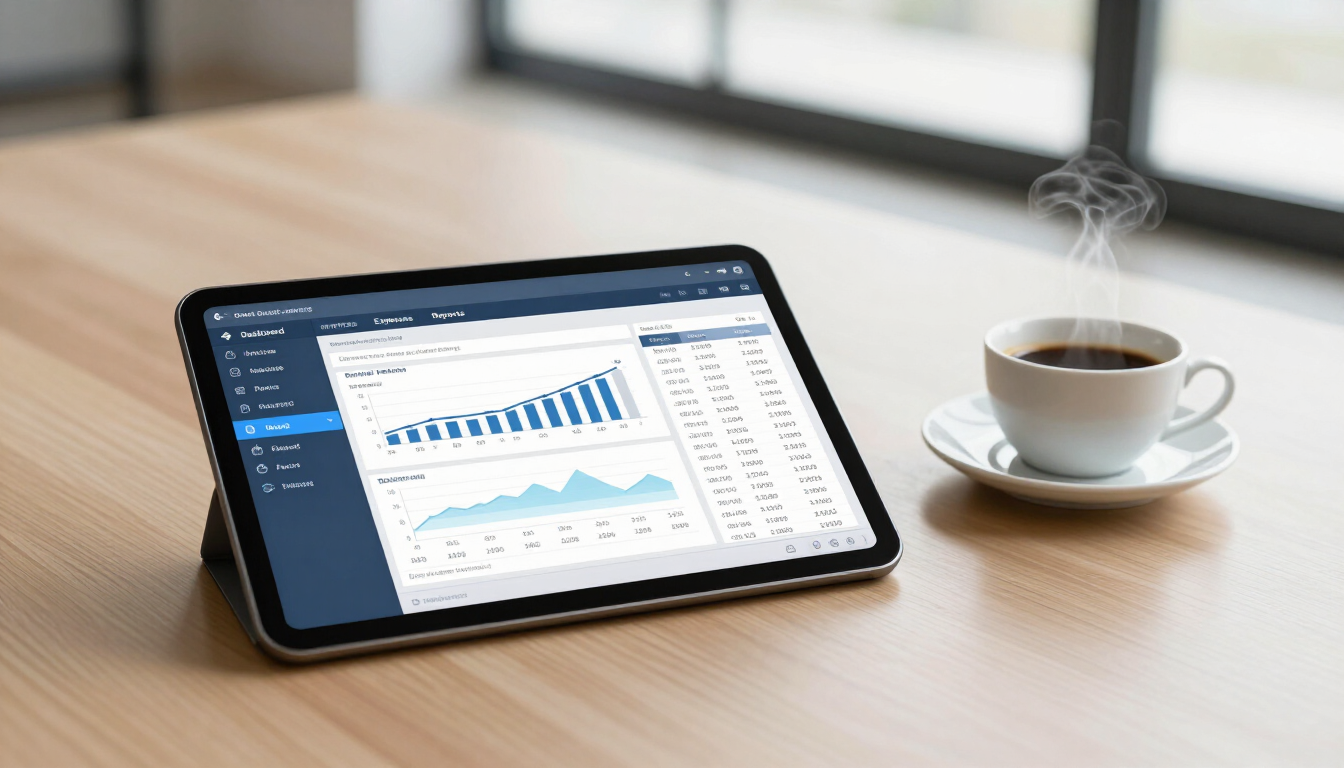
Financial Data Dashboard

How do you start an automation project without disruption?

The biggest fear most executives have regarding back office automation is the potential for chaos during the transition. The key is a phased approach. You don't have to automate everything on day one. Start with the biggest pain point—perhaps that's payroll or account reconciliation—and build from there. This allows your team to adapt to the new technology without feeling overwhelmed.

Steps for a successful rollout include:

  • Audit Your Current Processes: Identify where the most manual labor is currently spent.
  • Define Success Metrics: What does success look like? (e.g., reducing month-end close by 3 days).
  • Select the Right Partners: Work with experts who understand both the technology and the accounting.
  • Train Your Team: Ensure everyone understands how the new tools will make their lives easier.
  • Iterate and Expand: Once the first phase is stable, move on to the next area of the back office.

If you're ready to explore how these technologies can work for your specific needs, feel free to Contact us. We specialize in helping companies in San Francisco, Sacramento, and the San Juan counties navigate these complex digital transformations.

Summary of Back Office Automation Benefits

Automating your back office is the most effective way to ensure your business is ready for the challenges of 2026. By removing the burden of manual tasks, you empower your team to focus on growth and strategy. To recap the key takeaways:

  • Speed and Accuracy: Automation eliminates human error in payroll and bookkeeping while providing real-time data.
  • Compliance Security: Systems automatically stay current with changing tax laws across multiple regions.
  • Strategic Insight: AI-driven reporting turns raw data into actionable business intelligence.
  • Scalability: You can grow your revenue significantly without having to proportionally increase your back office headcount.
  • Future-Proofing: Modern ERP solutions like NetSuite provide the foundation for ongoing technological advancement.
Collaborative Finance Team

Recent Posts

Professional financial oversight and reporting for business growth.
July 16, 2026
Learn how a fractional controller provides stronger financial reporting, GAAP compliance, and oversight for growing businesses in San Francisco without the cost of a full-time hire.

Catch up accounting process and financial organization
July 11, 2026
Avoid tax season panic with our guide to catch up accounting. Learn how to reconcile old transactions and get your business finances back on track in 2026.

Professional ERP consultants working on a digital transformation strategy in a modern office.
July 10, 2026
Discover the top benefits of ERP consulting, from system selection to integration. Learn how expert guidance streamlines operations and boosts ROI in 2026.

Professional accountant working on a laptop with a financial dashboard, representing pre-fall accounting support services.
July 10, 2026
Secure your business's future by booking pre-fall accounting support and ERP advisory. Learn why the months before the busy season are critical for fixing financial gaps.

AI automation interface showing financial data and growth graphs.
July 8, 2026
Learn how to use Claude.ai to automate tedious accounting tasks, improve financial reporting accuracy, and streamline your ERP workflows with our 2026 expert guide.
Modern office setting with financial data displayed on a screen, representing fractional controller services.
July 5, 2026
Discover how a fractional controller can optimize your financial reporting, ERP management, and AI automation for smarter business growth in 2026.
Mobile phone scanning a business receipt using Expensify app
July 5, 2026
Discover the top benefits of using Expensify expense management to automate reporting, sync with NetSuite, and accelerate reimbursements for your business in 2026.
ERP setup consultants discussing software implementation in a modern office.
June 23, 2026
Discover how ERP setup consultants streamline transitions to NetSuite or Sage Intacct, ensuring scalable accounting and automation for growing firms.
A professional team discussing financial growth strategies in a modern office environment.
June 23, 2026
Learn how fractional CFO and controller services provide cost-effective financial leadership and ERP management to help growth-focused businesses scale in 2026.